
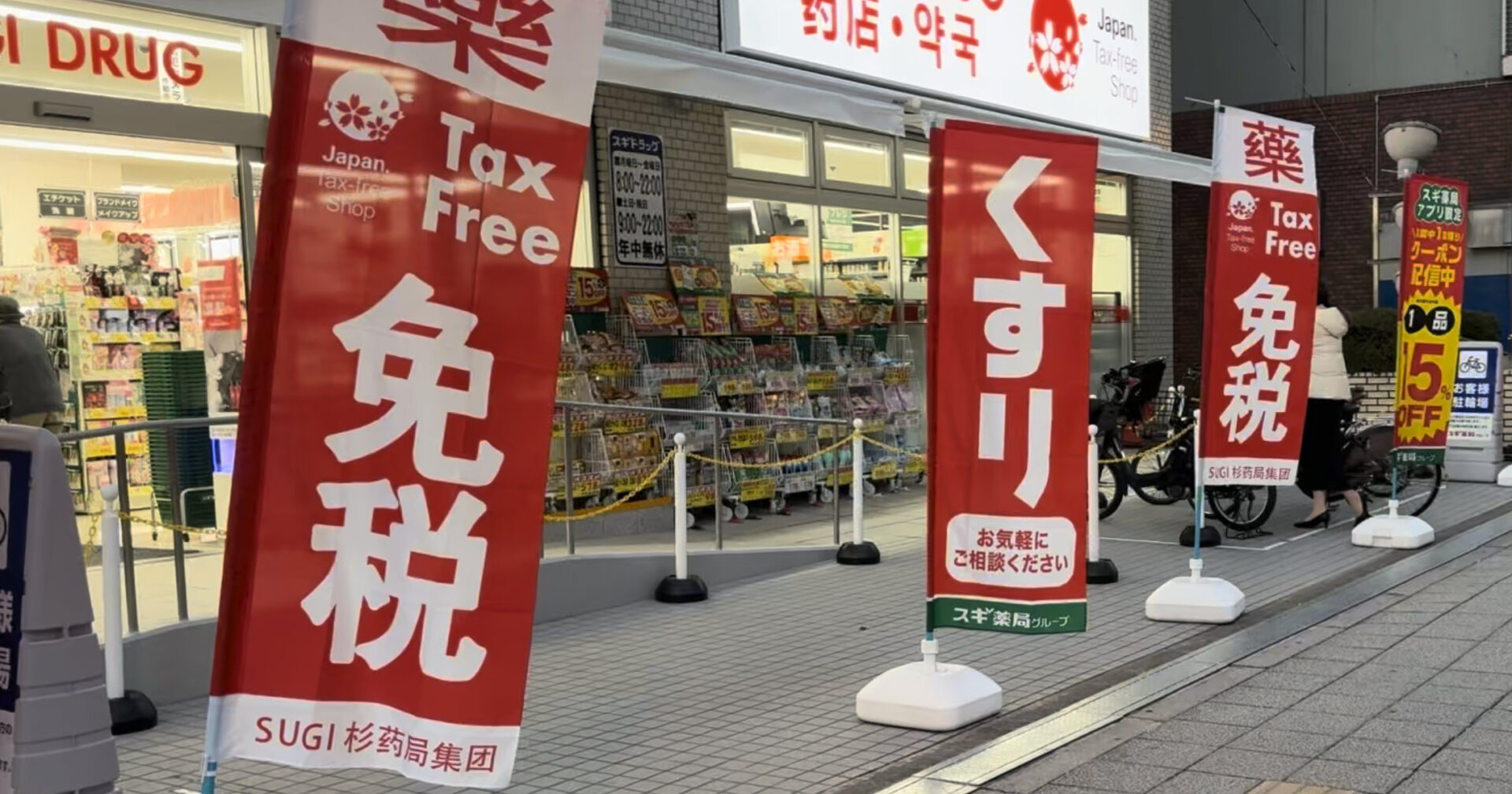
For many international visitors to Japan, “Tax-Free” shopping is a familiar part of their trip. However, the system will change significantly from November 1, 2026.
Under the current system, travelers can generally purchase eligible goods without paying Japanese consumption tax by presenting their passport at a tax-free store. Under the new system, travelers will first pay the tax-inclusive price. They will then receive a refund of the amount equivalent to the consumption tax after customs confirms, at the time of departure, that the goods are being taken out of Japan.
This change will affect not only travelers but also businesses operating tax-free stores. Retailers will need to review their checkout procedures, refund arrangements, accounting treatment, systems, and foreign-language guidance.
In this article, “Tax-Free” refers to Japan’s consumption tax exemption system for purchases made at tax-free stores. It is different from the system used by airport duty-free shops.
- The New Refund Model from November 2026
- Key Changes at a Glance
- A Cash Refund at the Airport Is Not Guaranteed
- Complete the Procedure Before Checking Your Baggage
- Purchased Goods Must Generally Be Taken Out of Japan
- Customs Confirmation Is Required Within 90 Days
- The Departure Procedure
- Be Careful When Shipping Goods Overseas Separately
- Tax-Free Stores Need Clear Guidance for International Travelers
- Summary
The New Refund Model from November 2026
The new system is generally referred to as a “refund model.” The basic process will be as follows:
- The traveler presents a passport or other required document at a tax-free store.
- The traveler purchases the goods at the tax-inclusive price.
- The purchase information is transmitted to the National Tax Agency’s system.
- The traveler presents their passport or other required document at the airport or seaport of departure and receives customs confirmation. If requested by customs, the traveler must also present the purchased goods.
- The traveler must receive customs confirmation when leaving Japan within 90 days of the purchase date. All tax-free goods should remain in the traveler’s possession so that they can be presented if customs requests an inspection.
- If customs confirmation cannot be completed at the time of departure, the traveler will generally not be eligible to receive a refund of the amount equivalent to the consumption tax.
- After customs confirmation, the goods must actually be taken out of Japan. If the traveler does not take the goods overseas, consumption tax equivalent to the exempted amount may be collected. A failure to export the goods without delay and without a valid reason may also result in penalties.
- Because the traveler must carry the goods out of Japan, there will naturally be practical limits on the quantity that can be purchased.
- After customs confirmation, the tax-free store or a refund service provider will refund the amount equivalent to the consumption tax.
This is not a system under which the traveler files a consumption tax refund claim with a Japanese tax office. The refund will be made by the tax-free store that sold the goods or by a service provider appointed by that store.
Key Changes at a Glance
The main differences from the current system can be summarized as follows:
- Goods will be sold at the tax-inclusive price rather than being exempted from consumption tax immediately at the time of sale.
- Customs confirmation will be required within 90 days of the purchase date.
- The seller will complete the tax-exemption treatment only after customs has confirmed that the goods are being taken out of Japan.
- The consumption tax amount will be refunded after the tax-free treatment has been confirmed.
- The distinction between general goods and consumable goods, as well as the special packaging requirements for consumables, will be abolished.
- Gold and platinum bullion and certain similar items will be excluded from the tax-free system.
- The wording limiting eligible products to goods for ordinary personal use will be removed.
- The minimum purchase amount of JPY 5,000 will be determined based on the price before consumption tax.
The new system will apply based on the date of sale, rather than the traveler’s departure date. In other words, it will apply to eligible purchases made on or after November 1, 2026.
For tax-free goods with a pre-tax price of JPY 1 million or more, the store will need to include information identifying the individual product, such as a serial number, in the purchase record transmitted to the authorities.
A Cash Refund at the Airport Is Not Guaranteed
One point that may be easily misunderstood is that customs will not automatically issue a cash refund to the traveler at the airport.
Possible refund methods may include a bank transfer, a credit card refund, payment via an app, or a cash refund at the airport of departure. However, Japan’s Consumption Tax Act does not prescribe one uniform refund method.
A tax-free store may also appoint an outside service provider to process and send the refund.
As a result, the refund method and timing may differ from one store to another. Travelers should ask at the time of purchase, “How will I receive the refund?”
Complete the Procedure Before Checking Your Baggage
At the time of departure, the traveler will scan their passport at a terminal provided for the tax-free procedure at the airport or seaport.
If the system determines that an inspection is required, a customs officer will check the purchased goods.
The traveler must therefore have the tax-free goods in their possession. If the goods have been packed in a suitcase, the customs procedure must be completed before the suitcase is checked in with the airline.
If the traveler waits until shortly before boarding, there may not be enough time to complete an inspection. In that case, the traveler may be unable to receive the refund. It is advisable to arrive at the airport with sufficient time.
Purchased Goods Must Generally Be Taken Out of Japan
Although the special packaging requirements will be abolished, consumable goods such as food, beverages, medicines, and cosmetics generally cannot receive export confirmation if they have been fully or partially consumed in Japan.
For goods other than consumables, it may still be possible to obtain export confirmation even if they were used in Japan, provided they are ultimately taken out of the country.
If food has already been eaten before departure, or if an item has been lost, customs may be unable to confirm that the item is being taken out of Japan.
Under the consumption tax rules, tax paid on goods consumed in Japan is not refundable.
If the traveler no longer possesses the goods at the time of departure, for example because the goods were consumed in Japan, customs confirmation will generally not be available, and the consumption tax amount will not be refunded.
Another important point is that customs confirmation will generally be conducted for each purchase record, typically each individual receipt or checkout transaction.
If some of the goods included in one purchase record are missing, the tax-free treatment may also be denied for the other goods included in the same purchase record.
Customs Confirmation Is Required Within 90 Days
Customs confirmation that the goods are being taken out of Japan must be received within 90 days of the purchase date.
Travelers staying in Japan for a relatively long period or making an expensive purchase near the beginning of their trip should check the number of days remaining before their departure.
As a general rule, the minimum eligible purchase amount will be JPY 5,000 before consumption tax for purchases made at the same store on the same day.
The current JPY 500,000 maximum purchase amount for consumable goods and the special packaging requirements for those goods will be abolished.
The Departure Procedure
An eligible tax-free purchaser must present their passport when departing Japan within 90 days of the purchase.
The procedure will be completed using a customs terminal at the airport.
The terminal will indicate whether a customs inspection is required.
If no inspection is required and the traveler receives a green result, the procedure is complete.
If an inspection is required and the traveler receives a red result, customs will check whether the traveler has the purchased goods in their possession.
If the goods are not taken out of Japan, consumption tax may be collected, and penalties may apply depending on the circumstances.
The inspection will be conducted for each set of purchase record information, generally on a receipt-by-receipt basis.
For example, suppose one receipt contains three items. If the traveler is unable to present even one of those items, tax-free treatment may be denied for all three items included on that receipt.
Be Careful When Shipping Goods Overseas Separately
The previous treatment, allowing travelers to purchase goods at a tax-free store and later send them overseas themselves through a post office or delivery company, was abolished in April 2025.
Even if you wish to ship merchandise overseas, you are not eligible for tax-free treatment under the “separate shipment” method, in which travelers purchase the items and then ship them themselves via a post office or shipping company.
On the other hand, under the “direct shipment” method—where you enter into a shipping contract at the point of sale and hand the merchandise over to the carrier on the spot—you may be eligible for export tax exemption under certain conditions. Be sure to check with the store before making a purchase to see if this option is available.
Tax-Free Stores Need Clear Guidance for International Travelers
Businesses operating tax-free stores will need to do more than simply update their checkout systems.
They will need to clearly explain that the traveler must initially pay the tax-inclusive price, complete customs procedures at the time of departure, receive confirmation before placing the goods in checked baggage, and follow the store’s specific refund method and timing.
English-language guidance should clearly communicate the basic sequence: the traveler pays the full amount first and receives the refund later.
Summary
From November 2026, Japan’s tax-free shopping system for international travelers will change from an immediate consumption tax exemption at the point of sale to a refund system based on customs confirmation at the time of departure.
Travelers will need to pay the tax-inclusive amount temporarily, and the airport procedure will become more important than it is under the current system.
Tax-free stores should begin reviewing their refund methods, system arrangements, accounting procedures, and multilingual explanations well in advance.
The detailed operation of the new system may continue to be updated. Travelers and businesses should check the latest information published by the National Tax Agency and the Japan Tourism Agency before traveling or introducing a new system.